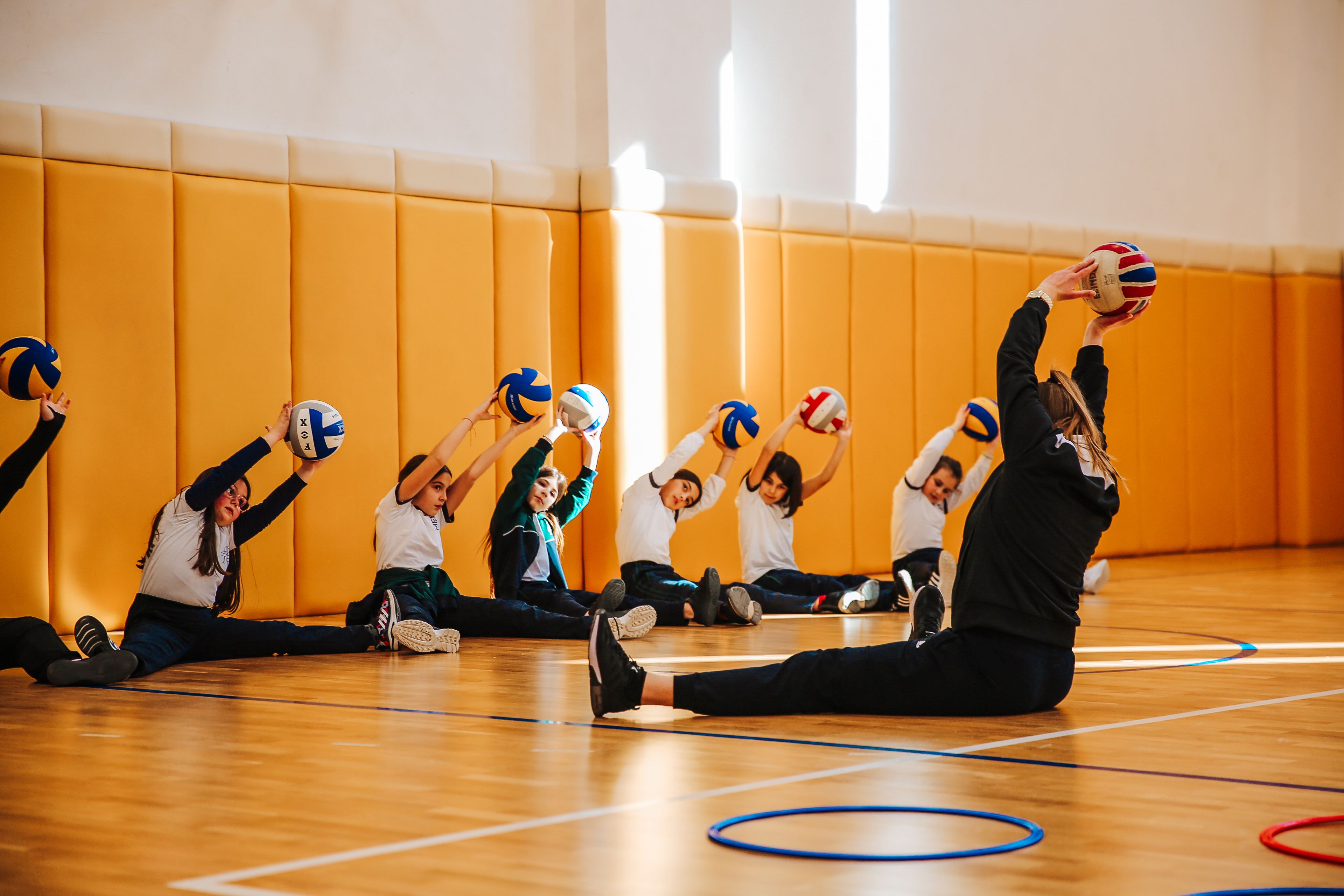
Smoother PE Transitions
A lesson can have a clear objective and useful practice tasks, then lose its rhythm when everyone changes stations.
Equipment is still moving. Students are unsure where to go. A group reaches the next station before the previous group has left.
When I look at that transition, I want to know whether students have been taught the steps they are expected to follow. “Rotate” leaves a lot for them to figure out.
The useful questions are specific: What happens to the equipment? Who moves first? Which route do students use? What do they do when they arrive?
Plan one transition before tomorrow's class
Choose one moment that regularly needs attention: collecting equipment, moving between stations, changing partners, or getting ready for the demonstration.
Write the routine in a few observable steps:
1. Respond to the agreed stop signal. 2. Make the equipment safe using the procedure taught for that activity. 3. Move only when released, along the assigned route. 4. Arrive at the identified location and follow the next direction before restarting.
Those are planning prompts, not a universal script. A ball, racket, scooter, and resistance band need different equipment procedures. A student using a mobility device may need a different route or more space. The signal must be accessible to the students using it.
Vanderbilt's IRIS Center recommends teaching clear procedures and adapting how they are presented to students' needs. Its elementary guidance supports brief language and visual cues for younger students. The PE examples below are applications to gym settings, not a claim that one classroom procedure fits every age. IRIS: Procedures
Elementary: show the next action
For K–2, start with one change and a visible destination. Demonstrate where equipment rests and where students wait. A picture or floor marker can help make that destination clear. Rehearse before adding more equipment or another direction.
For grades 3–5, use a short sequence students can explain and demonstrate. For example, in an already-taught partner throwing task, students stop sending, place balls in the designated safe locations, and wait for the teacher to release the next group. Nobody retrieves a loose ball through active throwing space.
The transition supports the lesson. It is not the main motor-skill lesson for the whole class period.
Middle school: make the route and roles clear
At a station change, students need more than a destination. They need to know whether equipment stays, which group leaves first, and what happens if the next station is occupied.
For six established groups of four, number the stations and display the next destination. Keep equipment at each station when the task allows it. After all activity has stopped, release groups in an order that avoids crossing traffic. Students wait at the designated starting location until the teacher confirms that practice can restart.
Assign a student to check the station card or report missing equipment, but keep supervision and the restart decision with the teacher. Review a bottleneck with students: Was the route unclear, or were two groups released into the same space?
High school: explain the safety decision
Older students can take more responsibility for understanding the transition rather than simply memorizing a signal.
In an established resistance-training lesson, for example, movement between stations begins only after the current movement or supported repetition is completed safely and equipment is secure. A rotation cue must not require a student to abandon a loaded movement. Use the teacher's taught procedures and applicable individual plans.
Ask students to identify the safe condition needed before anyone moves. That is a more useful expectation than rewarding whichever group arrives first. The same approach can apply to racket activities or small-sided games, with equipment procedures appropriate to the activity.
Teach it in five minutes, then use it in the lesson
Keep the class's existing safe grouping and equipment quantities. Add a route diagram, station numbers, or visual cue only where needed.
Use one minute to explain the transition and its safety purpose, one minute to demonstrate it, two minutes for a supervised rehearsal and a brief correction if needed, and one minute to check the steps with students. Extend the teaching if it is not safe yet; five minutes is a planning allowance, not a deadline.
Objective: Students will move from the current task to the next task using the taught equipment, route, and arrival procedures.
Look for: Equipment is secure before movement, students use an accessible assigned route, and the next activity starts only after release. Note the step that needs support. Do not turn the transition into a race or grade students on speed.
For students who need additional support, preview the change, use a visual sequence, clarify language, and provide an accessible route or communication option. Follow school procedures and applicable student plans. A verbal explanation can show understanding, but it is different evidence from performing a safe transition.
Connect the routine to PE learning
SHAPE America's 2024 PE indicators address responding to directions in K–2 (3.2.4), increasing independence with safety in grades 3–5 (3.5.4), appropriate equipment behavior in grades 6–8 (3.8.7), and safe participation practices in grades 9–12 (3.12.6). Match the expectation to the class and observe the actual action. A single rehearsal does not establish proficiency. Official national PE standards
Free PE Transition Checklist
Use this checklist to plan one transition for your class. Copy it into a document or print this page. Adapt each step to the activity, grade, space, and student needs.
Download the editable Word checklist: PE Transition Checklist (DOCX)
Before class
- [ ] Identify the transition's purpose and what students should do next.
- [ ] Choose an accessible stop or attention signal and preview it.
- [ ] Define the activity-specific equipment procedure. Do not require students to stop a movement abruptly if it must be completed safely.
- [ ] Mark where equipment rests or who carries it, if carrying is appropriate.
- [ ] Check the route, spacing, obstacles, and mobility access.
- [ ] Decide which groups move first and where other students wait.
- [ ] Identify the arrival location and restart direction.
- [ ] Plan visual, language, communication, or movement supports consistent with student plans.
- [ ] Keep every group supervised and follow school procedures.
Equipment procedure: _______________________________________ Accessible signal: ________________________________________ Route and group release order: _____________________________ Arrival action and restart direction: _______________________ Student access supports: ____________________________________
Teach and check
- [ ] Explain the safety purpose and demonstrate the sequence.
- [ ] Rehearse with the class's established safe grouping and equipment.
- [ ] Check equipment, route, and arrival actions. Do not turn the transition into a race.
- [ ] Reteach the step that needs support; adjust the environment when needed.
Five-minute planning allowance: Explain (1 minute); demonstrate (1); supervise a rehearsal and brief correction (2); check understanding (1). Allow more time if students are not ready to transition safely.
Adapt the directions
- K–2: Plan one change at a time, use short directions, show the destination, and model what happens to equipment.
- Grades 3–5: Use a short sequence students can demonstrate with increasing independence.
- Grades 6–8: Make station routes, release order, and equipment or communication roles explicit.
- Grades 9–12: Ask students to explain the safe conditions for moving and follow activity-specific equipment procedures.
After class
What I observed: ____________________________________________ Step needing support: _____________________________________ One change for next class: ___________________________________
This is a transition-planning aid, not a complete PE lesson or an individual support plan. Different classes may need different routines.
I’m building WellnOS to support practical planning while keeping the teacher in control of decisions for the class. If you’d like more PE and Health planning ideas in your inbox, use the newsletter form below.