For middle school educators, coaches, and families.
Middle school team sports give students a place to practice more than the sport itself.
Students have to communicate while a play is developing, adjust after a mistake, accept feedback, and contribute when they are not the person scoring. Those skills deserve instruction and attention throughout a season.
For some students, middle school athletics also provides an introduction to the peers, expectations, and practice habits they may encounter on a high school team. That can be a useful beginning. It is not a guarantee of a future roster spot, and it should not be the only reason the experience matters.
Build skills students can use next season
A well-run program gives students repeated opportunities to practice sport-specific skills, learn rules, and make decisions with teammates. The teacher or coach should make the learning visible: What is the student working on? What feedback will help? What will they try differently next time?
For example, a basketball player can work on moving into a passing lane and communicating with the ball handler. A volleyball player can work on calling for the ball early enough for teammates to respond. Both tasks require attention to other people, not just an isolated technique.
Students who later attend the same high school may already have experience practicing together. They may know how a teammate communicates or how to recover after a disagreement. That familiarity can provide something to build on in JV or varsity settings, while new students and later beginners still need a fair opportunity to join and develop.
Middle school selection should not be treated as a final judgment of future ability. The American Academy of Pediatrics notes that physical maturity and body size can matter when matching young people for contact sports. Students do not all develop on an identical schedule. AAP: Is Your Child Ready for Sports?
Teach character through specific actions
Putting students on a team does not automatically teach sportsmanship.
Adults have to show what it looks like, create opportunities to practice it, and respond consistently when it is missing. “Be a good teammate” becomes more useful when it means something observable:
- Give a teammate one relevant cue without insulting them.
- Help a new player understand a rotation.
- Resolve a disputed call through the team's agreed procedure.
- Take responsibility for a mistake and prepare for the next play.
- Recognize a contribution that did not produce a point.
The National Youth Sports Strategy identifies opportunities for teamwork, leadership, and relationships among the benefits of youth sport. The quality of the program matters: students need supportive coaching and meaningful opportunities to participate. U.S. Department of Health and Human Services: National Youth Sports Strategy
Give school pride a practical meaning
A team can give students a shared event to support, a reason to learn classmates' names, and an opportunity to represent the school respectfully.
Schools can encourage that connection by recognizing effort, improvement, inclusion, and respectful conduct alongside results. A student who welcomes a new teammate contributes to the program even when their name never appears in the scoring summary.
School morale should include students who do not make a competitive roster or do not want to play interscholastic sports. Intramurals, adapted opportunities, recreational teams, and other activities can offer additional ways to participate. PE remains instruction for every student; a school team does not replace it.
Treat stronger school connection as something to support and assess locally, not an automatic result of fielding a team. Ask students whether they feel included, whether adults listen, and whether practical barriers keep them from participating.
Keep high school and college goals in perspective
It is reasonable for a student to want to play in high school or college. Adults can support that interest without turning middle school into a recruiting deadline.
Useful preparation includes learning the sport, responding to feedback, building study routines, and asking the school athletic department about its actual participation requirements. JV and varsity structures, tryouts, and eligibility requirements vary. Prior participation does not ensure selection.
For NCAA participation, families should use the NCAA Eligibility Center for current academic and athletics eligibility guidance. Meeting eligibility requirements is separate from being recruited, selected, or offered financial aid. NCAA opportunities are also only one part of the wider college sport landscape. NCAA Eligibility Center
The NCAA publishes sport-specific estimates of participation beyond high school. Those comparisons are not a prediction for an individual student and do not show that playing a middle school sport causes college participation. NCAA: Probability of Competing Beyond High School
Leave room for other sports and activities. AAP guidance cautions against early single-sport specialization and intensive year-round training. A student's interests, wellbeing, and opportunity to try something different should remain part of the conversation. AAP guidance
Free resource: Teamwork Practice Card
The free card below gives students one teamwork action to practice, an opportunity to use feedback, and a short reflection on what happened. Teachers can use it within a familiar PE activity or coaches can use it during an established practice.
Objective: Students will practice one agreed communication action and describe a specific example of its effect on the activity.
Success criteria: The student uses the agreed action during play, offers a specific partner observation, and identifies a reasonable next step. A written reflection supports the discussion; it does not replace observation of the action.
A 12-minute routine for 24 students: Use an already-taught activity, its existing equipment, and its established safety procedures. Keep the class's safe grouping arrangement; do not create extra courts to fit this routine. Spend two minutes modeling a communication action, three minutes practicing, one minute exchanging feedback, three minutes practicing again, and three minutes reflecting and collecting observations. With six established groups of four, partners exchange observations within their group during the pause. Nobody observes from an active play area.
Use an accessible action such as a taught hand signal, a verbal cue, or agreed alternative communication. Provide cue cards, demonstrations, translated keywords, and oral or dictated reflection options when needed. Keep movement adaptations consistent with student plans and the activity's learning goal.
Players notice partner actions while participating safely; they do not stand still in active space or write during play. Record observations during the pause, then try the agreed suggestion in the second round. Any non-playing observer stays in the established safe observation location.
In grades 6–8, the routine supports SHAPE America's 2024 PE indicators 3.8.2, through contribution to the group, and 3.8.4, through teacher-supported peer feedback. Teachers collect evidence by observing the interaction and reviewing a specific example, rather than grading a personality trait. Official PE standards
Teamwork Practice Card
Grades 6–8 • Free WellnOS teaching resource
Name: ________________ Date: ______ Activity: ________________
Choose one action
Choose an action taught and approved by your teacher or coach:
- Give an agreed cue before a pass or play.
- Offer a teammate one respectful, useful piece of feedback.
- Help the group carry out an agreed role or rotation.
- My accessible communication option: __________________
My action today: ______________________________________________
What it will look or sound like: _________________________________
Practice, pause, and try again
Practice during the activity. At the teacher's stop signal, move to the assigned safe place and exchange observations with your partner.
Notice your partner's action while taking part safely; do not stop in an active play area to observe or write. Complete the card during the pause. In the second practice round, try the agreed suggestion and notice what happens.
Partner observation: “I saw/heard you ____________________________.”
One suggestion related to the chosen action: _____________________
What I will try in the next round: _______________________________
Reflect
Describe one specific moment when you used the action: ________________________________________________________________
What happened next? Do not assume you know what another person felt. ________________________________________________________________
What will you keep or change next time? ________________________________________________________________
Teacher/coach notes
Use within an already-taught activity with appropriate equipment, spacing, supervision, and access supports. This card is not a standalone sport lesson.
12-minute sequence: Model and select action (2 minutes); practice (3); safely pause and exchange feedback (1); practice again (3); reflect and collect observations (3). For 24 students in six existing groups of four, partners observe within their group. Maintain the established safe format; no student should observe from an active play area.
Observable evidence: Record chosen action observed / support needed / not yet observed. Sample interactions across lessons; do not claim to assess every student continuously. Look for a specific contribution and respectful, task-relevant feedback. Accept oral, dictated, visual, or other accessible reflection responses. Do not grade popularity, extroversion, or a generalized character label.
Standards: Supports instruction toward 2024 SHAPE America PE 3.8.2 and 3.8.4. One brief routine does not establish overall proficiency. https://shapeamerica.org/standards/pe/new-pe-standards/
Next planning step: Which opportunity or support would let this student practice the action again? ___________________________________________
Teacher review required. Adapt the card to the students, activity, space, and school procedures.
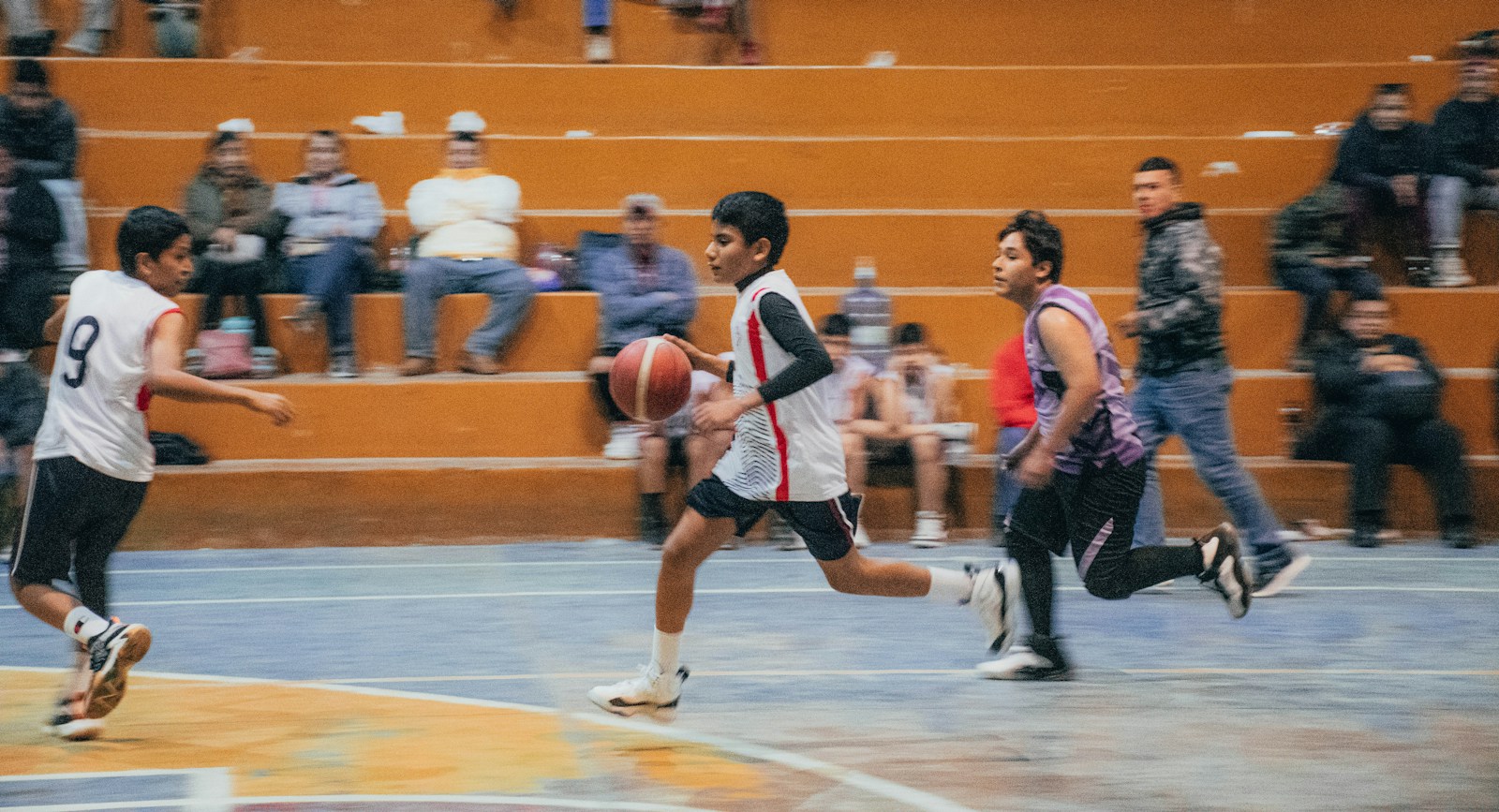
Featured image: Photo by Kenneth Schipper on Unsplash.
Middle school sports should give students a worthwhile experience now and skills they can carry forward, whether their next step is varsity athletics, a recreational league, or another way to stay active.
Want more practical PE and Health resources? Use the newsletter form below to subscribe to WellnOS for teaching ideas and resources you can review and adapt for your students. Subscribing is optional; the full practice card above is free to use without signing up.